Anti Vibration Rubber and Bonded Buffers Isolators - Resistoflex

BONDED BUFFERS

A bonded buffer consists of a cylindrical block of rubber vulcanized under pressure and temperature to a square steel base plate, which has clearance holes at each corner for attachment.

Material Advantage

Special high damping resilient rubber is used to absorb maximum energy and reduce the impact forces transmitted.

Applications & Benefits
  • Machines and buildings are provided with a very high degree of protection.
  • Structures can be designed for lower forces, resulting in economy in construction.
  • The shock buffer effectively dampens the movements of machines or components that need to be slowed down or stopped.
Performance

Through the excellent resilience of the rubber, a high degree of energy absorption is achieved. The rubber is stiffer for rapid dynamic processes compared to slow static applications. With the same deformation, more energy is absorbed in fast processes than in slow ones.
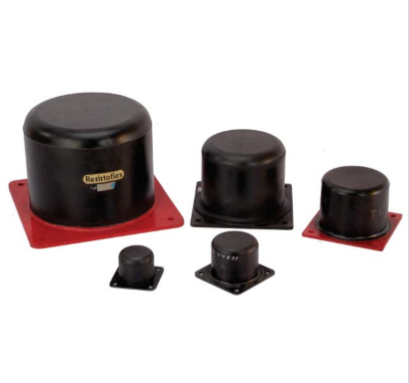
Bonded Buffer Image 1 Bonded Buffer Image 2
TYPICAL APPLICATIONS
Extended Use

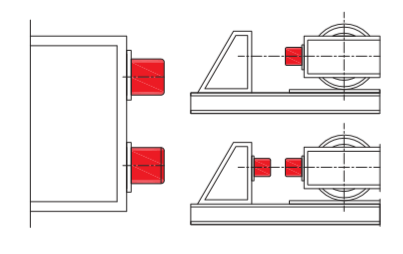
If a single buffer displays insufficient energy absorption characteristics, two units can be connected in series — one attached to the moving part of the machine and the other to the fixed part. This arrangement provides double energy absorption.

Buffers can also be connected in parallel to double the system load capacity.

Frequently Asked Questions

What are industrial buffers and what is their purpose? +
Industrial buffers are mechanical components designed to absorb and dissipate sudden impact loads in machinery and equipment. They act as shock absorbers, protecting structural parts from damage, reducing wear, and improving operational safety. By using high-grade elastomers or rubber, they provide excellent energy absorption while maintaining a compact design.
Where are industrial buffers commonly used? +
Industrial buffers are widely used in material handling systems, robotic automation stops, elevators, cranes, hoists, press machines, and conveyor systems. They are essential wherever machinery movement must be stopped safely without causing mechanical damage.
How do industrial buffers absorb impact? +
Buffers absorb impact through their elastomer or rubber material, which deforms under load and converts kinetic energy into heat. This controlled energy dissipation prevents high-impact forces from transferring to machinery frames or structural parts, thus avoiding costly repairs and downtime.
What materials are used in Resistoflex industrial buffers? +
Resistoflex industrial buffers are manufactured from high-grade elastomers or specially engineered rubber compounds, selected for their durability, flexibility, and ability to withstand demanding operational conditions without significant wear.
How do I choose the right industrial buffer for my application? +
Selecting the right buffer depends on factors like the weight of the moving load, impact speed, available installation space, and required energy absorption capacity. Resistoflex offers buffers in various sizes and load ratings, and our engineering team can help you determine the most suitable model for your specific machinery.
Do industrial buffers require maintenance? +
Industrial buffers are generally low-maintenance, but periodic inspections are recommended. Checking for cracks, excessive wear, or deformation ensures that the buffer continues to perform effectively. Replacing worn buffers on time helps maintain machine safety and efficiency.

Unlock Your Potential with Expert Guidance

We’re dedicated to providing custom-engineered solutions that enhance efficiency and performance.
Let’s work together to achieve your project goals seamlessly.

RESISTOFLEX
Typically replies within an hour

resistoflex
Hi there 👋
How can I help you?
01:16 PM
×
Chat with Us