


Eliminate Equipment Vibrations with High-Performance Spring Mounts
- 11 july 2025
- Eliminate Equipment Vibrations with High-Performance Spring Mounts
Eliminate Equipment Vibrations with High-Performance Spring Mounts
Introduction
In industrial environments, equipment efficiency, safety, and longevity are closely linked to how well vibrations are managed. Often overlooked, vibration isolation is essential to ensure the reliable operation of heavy machinery, HVAC systems, and precision instruments. One of the most effective solutions for this purpose is the use of spring mounts. This article explores the importance of vibration isolation, how spring mounts work, and why they are indispensable across a wide range of industrial applications.
The Importance of Vibration Isolation in Industrial Systems
Vibrations generated by heavy machinery or rotating equipment can have serious consequences if not properly controlled. Excessive vibration leads to:
- Accelerated wear and tear
- Increased maintenance requirements
- Operational inefficiencies
- Structural damage to the surrounding equipment
- Noise pollution and worker discomfort
Vibration isolation helps minimize the transfer of these vibrations to surrounding structures. This not only improves machine performance but also ensures a safer and more stable operating environment.
What is Vibration Isolation?
Vibration isolation refers to the process of decoupling machinery from its foundation or support structure to prevent the transmission of vibratory energy. This is achieved using specially designed isolators that absorb and dampen vibration forces.
Spring mounts, rubber pads, and composite isolators are all part of this category, each suited for different vibration frequencies and load conditions.
How Spring Mounts Work
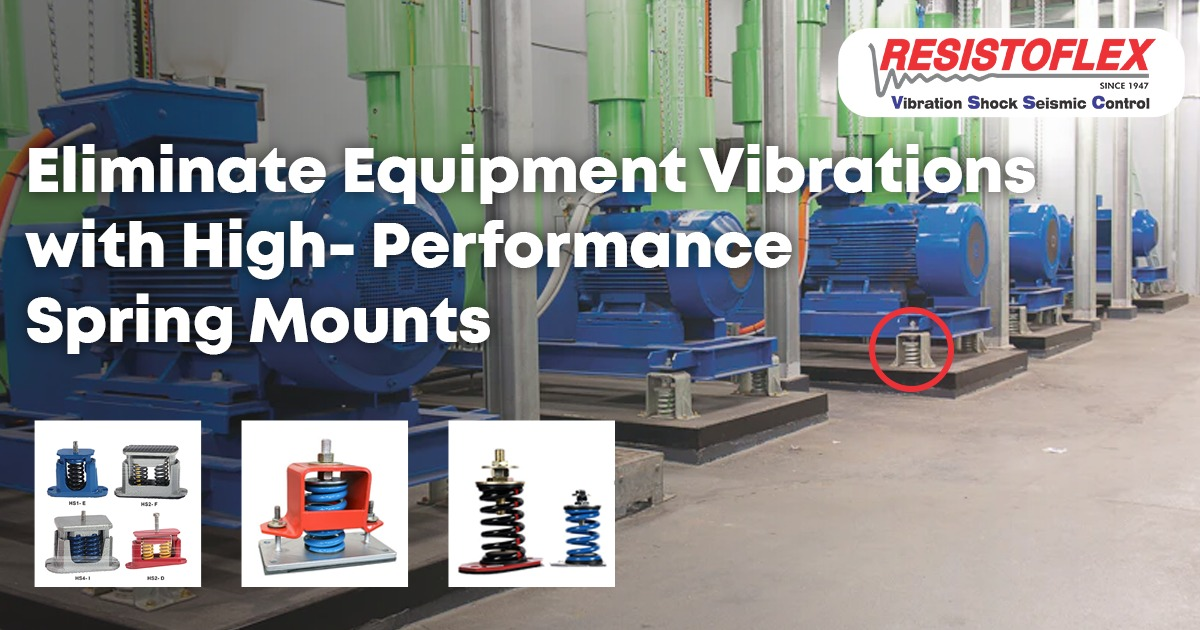
Spring mounts are mechanical devices that use coil springs—sometimes in combination with damping elements—to absorb and reduce vibrations. When a machine operates, it generates vibrational energy. The spring mount compresses and expands in response to this motion, absorbing the energy and reducing its transmission to the floor or adjacent structures.
This mechanism is particularly effective for controlling low-frequency vibrations, where traditional rubber mounts may fall short.
Key Applications of Spring Mounts
Spring mounts are widely used in:
- HVAC systems such as chillers, air handling units, and cooling towers
- Diesel generator sets and pump systems
- Compressors, blowers, and industrial fans
- Sensitive lab and medical equipment
- Industrial machinery requiring seismic isolation, additional seismic snubbers may be added
Their ability to provide stable support while controlling movement makes them ideal for demanding environments.
Types of Spring Mounts Offered by Resistoflex
At Resistoflex, we offer a variety of spring mounts to suit different operational needs:
- Open Spring Mounts
- Restrained Spring Mounts
- Housed Spring Mounts
- Combination Mounts
Designed for maximum flexibility, these mounts provide high deflection and are typically used where high levels of vibration isolation are required without the need for lateral restraints.
Incorporate mechanical restraints to limit excessive movement. These are ideal for seismic zones or applications where equipment must remain aligned under dynamic loading.
Encased in a protective housing, these mounts are used in harsh environments where durability and protection against external elements are critical.
These use both springs and rubber or elastomeric components to manage both high and low-frequency vibrations, offering a balanced solution for mixed environments.
Advantages of Using Spring Mounts
- Effective noise and vibration control
- Extended equipment life
- Improved operational accuracy and stability
- Reduced maintenance and downtime
- Enhanced workplace safety and compliance
Compared to other isolation options, spring mounts provide consistent performance even under heavy loads and varying environmental conditions.
Selecting the Right Spring Mount
Choosing the appropriate spring mount involves evaluating several key factors:
- Load-bearing capacity of the equipment
- Vibration frequency range
- Environmental conditions (temperature, moisture, exposure to chemicals)
- Installation space and layout constraints
- Structural considerations, such as seismic load requirements
At Resistoflex, we assist customers in selecting or customizing the right vibration isolation solution for their specific application.
Maintenance of Spring Mounts
Spring mounts require minimal maintenance. However, periodic inspections are recommended, particularly in harsh or high-load environments. Checks should include:
- Spring fatigue or deformation
- Corrosion of metal components
- Deterioration of any rubber or elastomeric elements
- Installation space and layout constraints
- Integrity of housing and restraints
Regular assessments help maintain optimal performance and avoid costly repairs or replacements.
Why Spring Mounts are a Superior Choice
While rubber pads or mounts are useful in certain scenarios, they often degrade over time and may not perform well in low-frequency or heavy-load conditions. Spring mounts offer greater durability, better performance under dynamic conditions.
Their ability to isolate a broad range of frequencies makes them a preferred choice in critical industrial applications.
Conclusion
Vibration isolation is more than just a support accessory - it is a fundamental element of efficient, safe, and long-lasting industrial operation. Spring mounts, with their robust design and reliable performance, play a central role in achieving this.
At Resistoflex, we provide engineered vibration control solutions, including a wide range of spring mounts tailored to meet the demands of modern industry. From HVAC to heavy machinery, our products ensure your equipment performs with stability and precision.
Enquire Now — and connect with our engineering team for expert guidance.