
Complete Guide to Selecting, Installing, and Maintaining Metal Expansion Joints in Fire Protection Pipelines
- 12 Sep 2025
Complete Guide to Selecting, Installing, and Maintaining Metal Expansion Joints in Fire Protection Pipelines
Introduction
Fire protection systems are the backbone of safety in residential, commercial, and industrial facilities.Whether it’s a high-rise building or a large manufacturing plant, these systems are designed to work flawlessly during emergencies. One of the most critical yet often overlooked components in these systems is the metal expansion joint. Unlike rigid pipe sections, metal expansion joints are engineered to handle movement, absorb thermal expansion, reduce stress on pipelines, and ensure system integrity under pressure. In this guide, we’ll walk you through everything you need to know about metal expansion joints in fire protection pipelines—how to select them, install them correctly, maintain them for longer life, and why Resistoflex metal expansion joints are a trusted choice across industries.
What Are Metal Expansion Joints in Fire Protection Pipelines?
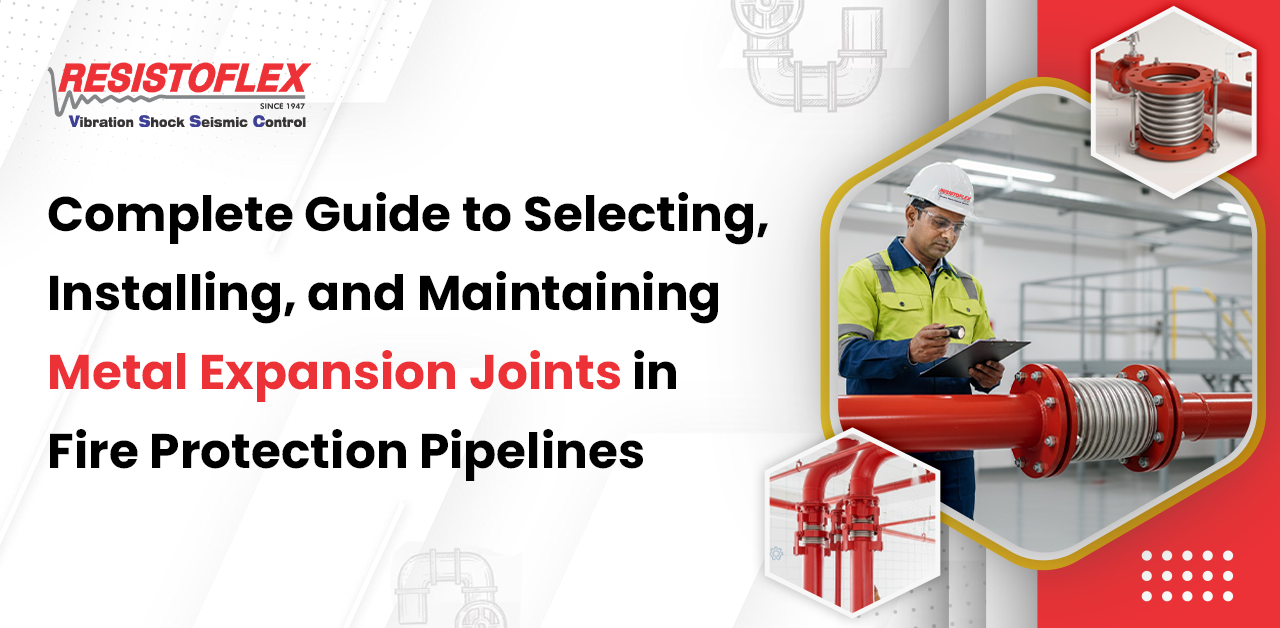
Metal expansion joints are flexible connectors made from stainless steel or other alloys, designed to absorb movement in a pipeline. They compensate for thermal expansion, vibration, and mechanical stress, ensuring that the fire protection system remains leak-free and reliable. Unlike rubber joints, which are more suitable for low to medium pressure, metal expansion joints are ideal for high-pressure and high-temperature environments, making them perfect for mission-critical fire safety applications.
Key Functions of Metal Expansion Joints
- Absorb thermal expansion and contraction in long pipelines.
- Reduce vibration from pumps, motors, and other equipment.
- Prevent cracks and leaks caused by mechanical stress.
- Improve overall durability and efficiency of the fire protection system.
Why Are Metal Expansion Joints Important in Fire Protection Systems?
Fire protection pipelines often run through areas exposed to extreme conditions—heat, vibration, and continuous water pressure. Without proper flexibility, these pipelines can develop leaks or fail during emergencies. Metal expansion joints ensure reliability by
- Guaranteeing uninterrupted water delivery during fire events.
- Reducing costly downtime and maintenance needs
Simply put, a well-chosen metal expansion joint is not just a component—it’s an investment in safety, performance, and long-term cost savings.
How to Select the Right Metal Expansion Joint
When choosing a metal expansion joint for fire protection pipelines, consider the following critical factors:
- Material Selection: Stainless steel expansion joints are commonly used in fire pipelines due to their strength, corrosion resistance, and durability. Resistoflex metal joints are engineered using premium grade alloys to withstand water, temperature variations, and aggressive site conditions.
- Pressure Rating: Always select a joint with a working pressure equal to or higher than your system’s design pressure. Resistoflex offers joints suitable up to 25 bar, commonly used in fire protection systems.
- Temperature Resistance: Metal expansion joints are ideal for environments where pipelines are exposed to high or fluctuating temperatures. Resistoflex stainless steel bellows can handle extreme ranges without loss of performance.
- Movement Requirements: Understand the axial and lateral movements expected in the pipeline. Choosing the correct design prevents premature wear and system stress.
Step-by-Step Guide to Installing Metal Expansion Joints
Proper installation directly impacts performance and lifespan. Follow these steps:
- Inspect before installation: Check for any visible damage or manufacturing defects.
- Ensure correct alignment: Never force an expansion joint into position; pipelines must be properly aligned.
- Tighten bolts correctly: Use a cross-pattern tightening method and avoid over-torquing.
- Allow for movement: Leave sufficient clearance for axial or lateral movements.
- Follow manufacturer’s guidelines: Resistoflex provides installation manuals with torque values and safety precautions.
Maintenance Best Practices
While metal expansion joints are durable, regular inspection ensures reliability in emergencies.
- Monthly visual checks for deformation, cracks, or leaks.
- Quarterly bolt inspections and retightening if required.
- Regular surface cleaning to remove dust, oil, or chemical buildup.
- Annual pressure tests to verify system integrity.
- Planned replacement after 10–15 years, depending on service conditions and cycles.
Resistoflex joints are designed for long service life with minimal maintenance, reducing operational hassles.
Common Problems & Their Solutions
Instead of a technical table, here’s a simple breakdown of frequent issues and how to handle them:
- Leakage at the joint: Usually caused by misalignment or loose bolts. Realign the pipeline and retighten bolts using correct torque.
- Premature wear: Often due to excess movement or incorrect joint selection. C Always confirm movement ratings before installation.
Why Choose Resistoflex Metal Expansion Joints?
Resistoflex has become a trusted name in expansion joints because of consistent engineering excellence and product reliability.
- Manufactured with precision to deliver consistent performance.
- Built for durability under pressure, vibration, and temperature variation.
- Available in multiple sizes and ratings to suit diverse applications.
- Widely trusted across industries where fire safety cannot be compromised.
By integrating Resistoflex "metal expansion joints, you ensure a robust fire protection system that performs when it matters most.
Conclusion
Metal expansion joints play a major role in the effectiveness of fire protection systems. The right selection, careful installation, and proactive maintenance can extend the life of your pipeline and ensure reliable performance during emergencies. With Resistoflex metal expansion joints, you gain not just a component but a complete assurance of safety, durability, and compliance—helping protect both infrastructure and lives.
Frequently Asked Questions
Q1: What is the purpose of a metal expansion joint in fire protection pipelines?
A metal expansion joint absorbs thermal expansion, vibration, and mechanical stress in fire protection pipelines. This prevents cracks, leaks, and premature pipeline failure, ensuring an uninterrupted water supply during emergencies.
Q2: Are metal expansion joints better than rubber joints for fire systems?
Yes. Rubber joints are suitable for low temperature applications, while metal expansion joints are designed for high-pressure and high-temperature applications. In critical fire protection systems, metal joints provide greater durability and reliability.
Q3: How long do metal expansion joints last?
The service life of a metal expansion joint is typically 10–15 years, depending on operating conditions, pressure cycles, and maintenance practices. Regular inspection and preventive maintenance can extend their lifespan.
Q4: How do I choose the right metal expansion joint?
Selection depends on material compatibility, pressure rating, temperature range & expected pipeline movements (axial, lateral).
Q5: What are common problems with metal expansion joints and how can they be prevented?
The most common issues are leakage, premature wear, cracks, or joint failure. These can be prevented by proper installation, selecting the correct joint design, and following regular maintenance schedules.
Q5: Do metal expansion joints require regular maintenance?
Yes. A monthly visual check, quarterly bolt tightening, annual pressure testing, and planned replacement ensure reliable performance during emergencies. Resistoflex joints are designed to minimize maintenance needs..
Q5: Why choose Resistoflex for metal expansion joints?
Resistoflex offers certified, high-quality metal expansion joints built to international standards. They are durable, versatile, and trusted across industries where fire safety cannot be compromised.